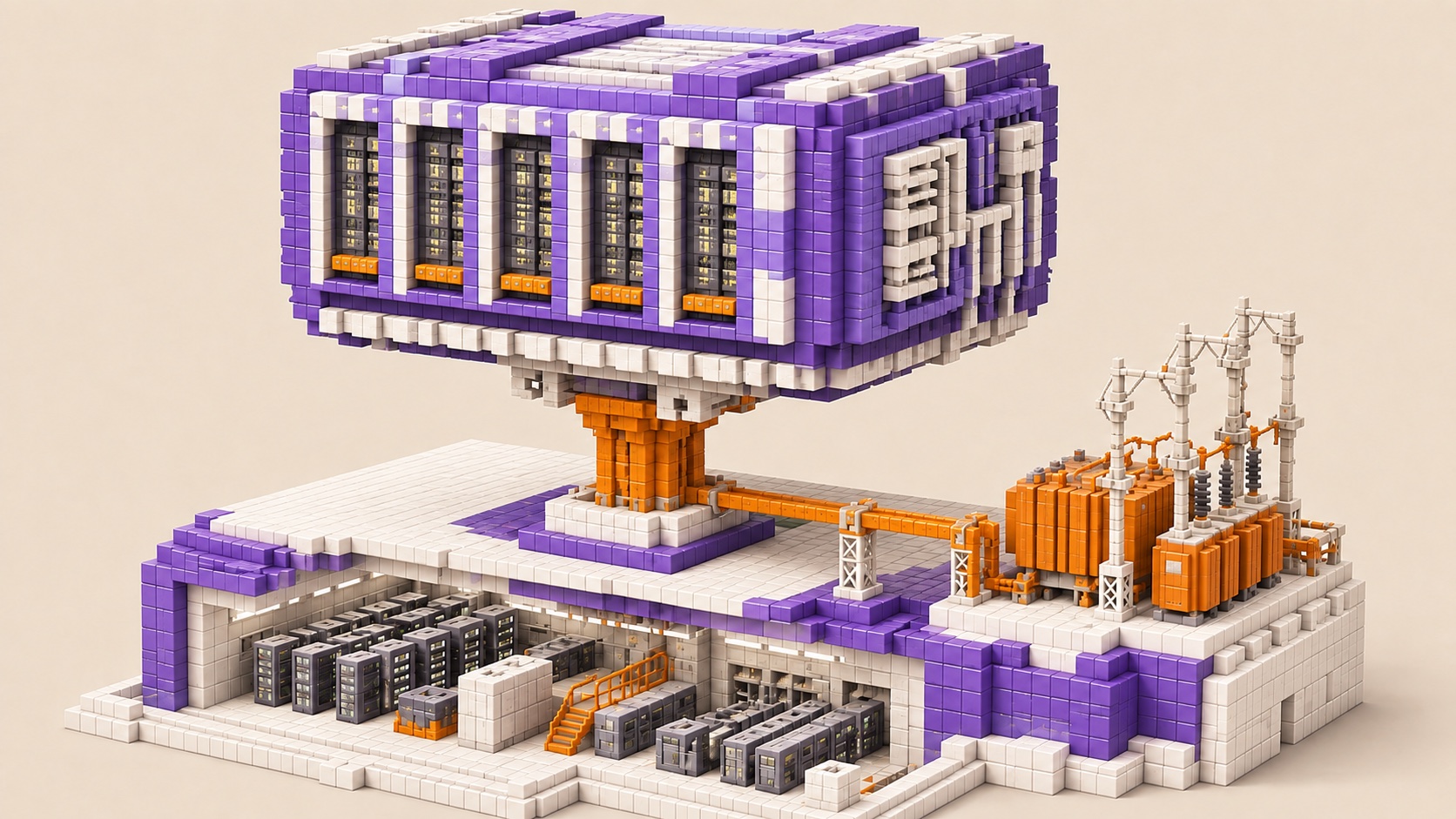
NVIDIA reported $96.221 billion of revenue for the quarter ended July 26, 2026, up 106%, at a 75.0% gross margin. Data-center sales were $89.023 billion; the next-quarter guide is $108 billion, plus or minus 2%, excluding China data-center compute revenue. Sales are expanding, without a complete sourced consensus basis here for a beat-or-miss claim. [1]
Cash moved differently. Operating cash fell from roughly $50.3 billion to $24.1 billion, receivables reached $63.1 billion and DSO rose from 45 to 60 days. Inventory increased from $25.8 billion to $31.6 billion. Longer terms for some investment-grade customers and Vera Rubin preparation help explain the divergence. The question is how much capital NVIDIA advances to support growth. [2][3]
In this article7 sections
Customer demand grows, with classification changes retained
Blackwell Ultra supports platform growth. Compute & Networking revenue was $88.299 billion, up 18% sequentially and 114% annually. NVIDIA says Blackwell represents the vast majority of revenue and Vera Rubin is in full production with racks operating at named partners including CoreWeave, Google Cloud, Microsoft Azure, Oracle and Nebius. Production readiness, delivery and paid customer use remain distinct stages.
Customer mix matters more. ACIE grew almost twice as fast sequentially as hyperscale, supporting broader demand. NVIDIA did reclassify one customer from ACIE to hyperscale and recast prior periods, so the comparison must use the restated series rather than treating classification as a new customer event.
China Hopper shipments were less than 1% of Data Center revenue, and Q3 again assumes zero China Data Center compute revenue. The quarter was not driven by a China reopening; China is also absent as a buffer. Export policy and local substitution remain scenarios outside management's base case.
| Metric | Disclosure | Notes |
|---|---|---|
| Revenue | $96.221B | Up 18% sequentially and 106% year over year. |
| Data Center | $89.023B | Up 18% sequentially and 117% year over year. |
| Hyperscale | $48.710B | Up 13% sequentially and 102% year over year. |
| ACIE | $40.313B | Up 25% sequentially and 138% year over year on the restated basis. |
Higher sales can accompany a lower margin
The quarter’s 75% margin covers current product costs; next-quarter guidance is 74%. Management also discussed 71%–72% in Q4 and an intended 72%–73% range in FY2028. These are prospective paths. Memory, materials, transition costs and pricing all matter, so a single demand explanation is insufficient.
The hardest supply evidence is contractual. Supply and capacity commitments jumped from $119 billion to $279 billion, primarily for memory. Roughly $92 billion falls in the remainder of FY2027, $87 billion in FY2028 and $88 billion in FY2029. NVIDIA is securing several years of HBM and related capacity, trading supply certainty for greater forecast risk.
If end demand continues higher, those commitments protect delivery. If product cadence, customer finance or campus activation slips, inventory and non-cancellable procurement can amplify margin pressure. The question has moved beyond HBM availability to whether each generation of memory, GPUs, networking and racks reaches customer acceptance in the same window.
Transition cost becomes visible
Q3 at 74% and the lower Q4 call range must be read with Rubin materials, memory pricing and price actions.
$279B of supply commitments
Mostly memory procurement, securing delivery while embedding a multi-year demand forecast.
$31.6B ahead of Rubin
The next test is whether inventory turns recover with system revenue.
Supply, leases, investments and guarantees differ
The $366 billion of future commitments includes $279 billion of supply and capacity, $29 billion of cloud services, $25 billion of uncommenced leases, $25 billion of equity investments and $8 billion of capital expenditure. Terms, cancellation rights and cash characteristics differ. They are not one current debt or cash-spending figure.
A separate $56 billion schedule covers third-party AI-cloud agreements and uncommenced leases. The model can extend beyond upfront infrastructure sales: when criteria are met, NVIDIA can participate in revenue generated by AI clouds from third-party customers. Upside is recurring participation; downside introduces utilization, customer credit and lease-transfer execution.
Guarantees are the change that deserves explicit pricing. Existing land, power and shell guarantees for AI-cloud partners carry $3.5 billion of maximum exposure. The initial 4.25GW PORTS-Pike phase carries a guarantee cap of $105 billion, activated in phases as facilities become ready for service and declining as OpenAI makes lease payments. Total maximum guarantee exposure is $108.5 billion. It is neither a realized loss nor an immediate $108.5 billion payment, but it is a conditional credit ceiling.
- 01Supply commitment
NVIDIA reserves wafers, memory, packaging and systems, taking demand-forecast risk.
- 02Land, power and shell
Developers build campuses while NVIDIA credit support improves financeability.
- 03System sale and lease
Hardware acceptance creates revenue; some leases are expected to be reassigned.
- 04Customer cash flow
AI-cloud and model-company utilization ultimately must cover rent and compute payments.
The call frames product costs and financing exposure
Management says customers’ own forecasts suggest demand growth could approach a doubling, with supply limiting delivery. That is company commentary, not an aggregate of fully executable customer orders. Memory, packaging, networking, racks and facilities still have to support recognized revenue.
The margin path matters more than the current 75%. Rubin launch costs and memory prices are expected to push Q4 lower before price and efficiency actions stabilize fiscal 2028. If growth continues and margin follows that bridge, the decline is transition cost. If margin falls while receivables, inventory and guarantees keep rising, the issue becomes capital efficiency.
The right financing question is not whether every arrangement is circular. It is whether risk is priced and isolated. Watch guarantee activation, collateral and recourse, successful lease assignment, revenue share generated by independent third-party demand, and NVIDIA's cash obligation after customer default. The $108.5 billion ceiling should neither be booked as a loss nor dismissed as a footnote.
Build a simple bridge from sales to profit and funding
Revenue of $96.221 billion at 75% implies roughly $72.166 billion of gross profit. At the next-quarter midpoints of $108 billion and 74%, gross profit would be $79.92 billion, up about 10.7% versus approximately 12.2% sales growth. This is midpoint arithmetic, not a precise forecast: a falling margin can coexist with rising gross-profit dollars.
Using revenue divided by 91 days as a simplified daily sales rate, an extra 15 days of credit represents about $15.86 billion of funding. Actual receivables depend on shipment timing, collections and contracts, so this is not an accounting decomposition. Longer terms carry a capital cost even for strong customers.
At an illustrative 5% annual funding cost, that amount represents roughly $793 million a year. Actual funding economics, customer compensation and cash opportunity costs differ. Longer terms can be rational if incremental profit compensates for capital and credit exposure; DSO alone cannot diagnose bad debt.
The $108.5 billion guarantee maximum is a contingent ceiling, not expected loss, and should not be added to incremental receivables as one loss estimate. Triggers, duration, recourse, collateral and payment are needed. The disclosed supply-commitment buckets for the fiscal-year remainder, FY2028 and FY2029 also do not exhaust the $279 billion total; unlisted periods must not be assumed away.
Fast-growing customers can still require more financial support
Faster ACIE growth broadens direct purchasing without necessarily diversifying final demand to the same extent. Different cloud providers may serve the same model companies, and hyperscalers may purchase through AI clouds. Direct counterparties and ultimate users are different risk maps.
Hyperscale revenue of $48.710 billion and ACIE revenue of $40.313 billion together form the $89.023 billion data-center total. A larger ACIE contribution can increase sales opportunities and contract variety while requiring closer attention to funding, facilities and acceptance. It should not be treated as a uniformly diversified credit pool.
Longer terms can be a rational exchange for large multi-year orders from investment-grade customers. But growth requiring continually longer credit, more guarantees and inventory increases capital intensity. Assess receivables and other support per dollar of sales alongside margin.
Supply reservations improve the chance of delivering complete systems rather than waiting for a missing component. Changes in product mix or delivery dates may leave committed materials difficult to adjust. Strong overall demand does not ensure that every configuration and quarter matches inventory.
Inventory growth can reflect a necessary launch or emerging impairment exposure. Subsequent delivery, turns and pricing distinguish them. Successful Rubin conversion would support the preparation case; persistently rising inventory alongside delayed revenue would require more conservative cash and profit assumptions.
PORTS-Pike support activates in phases at ready-for-service and declines with OpenAI rent payments. Delayed activation can defer exposure while also delaying the commercial opportunity. A project delay should not be called favorable merely because a guarantee is not yet fully effective.
Strong customers, contracts and margins provide meaningful buffers. Extended terms are not defaults, nor are purchase obligations certain losses. Normal collections, orderly stock conversion and declining support would weaken an adverse interpretation. A longer risk inventory does not erase strong operations.
The fuller standard is incremental business producing cash above its capital cost in a reasonable period. Platform expansion can create customer value while requiring more funding and engineering support. Subsequent results must show that capital and credit exposure per dollar of shareholder profit remain controlled.
Test revenue delivery and cash conversion together
Compare the $108 billion guide with delivery, then reconcile Rubin sales, inventory and margin through the product transition. DSO, operating cash and credit commitments answer a separate question: how much additional capital is required to sustain the sales pace?
The counter-case is also observable: memory and system cost rises faster than pricing, Rubin activation lags inventory, customer terms extend further, or campuses require more NVIDIA credit support. Any one can be manageable. In combination, they would require NVIDIA to be valued less like a pure high-margin platform and more like an infrastructure orchestrator with project-finance exposure.
Deliver the $108B guide
Zero China Data Center compute revenue is the stated comparison base.
DSO and operating cash flow
Growth must convert back into cash rather than continuously longer customer terms.
Inventory, margin and activation
Prebuild completes its conversion only after system acceptance and revenue.
Guarantee activation and transfer
Track ready-for-service, lease assignment and customer payment, not only gigawatts.
Sources
This website is for information and research only and does not constitute investment advice.