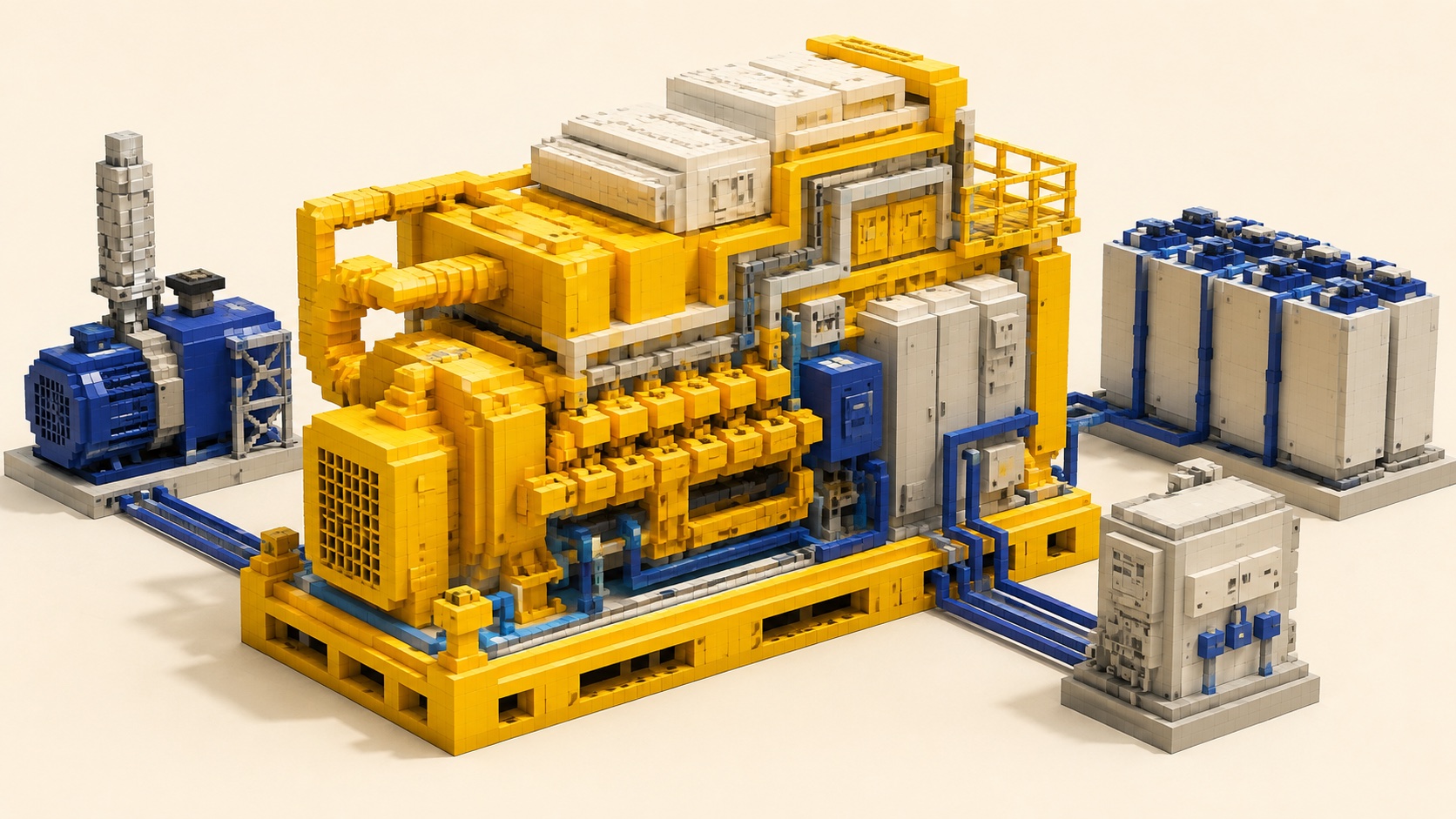
Partners Group announced on August 6 that it agreed to acquire a majority stake in AVK Power Solutions, with an initial equity investment above $1 billion alongside debt financing. Closing is subject to regulatory approval and conditions. The release cites more than 20,000 delivered projects and roughly 3.5GW of installed power as historical delivery figures; AVK's current revenue and capacity are not fully disclosed.
AVK is headquartered in the UK and serves backup, continuous and distribution power for data centers, telecom, industrial and infrastructure customers across FLAP-D and European emerging markets. The release says AVK holds a late-stage pipeline of more than 2GW of BTM power.
The structural signal is larger than the headline amount: private capital is treating data-center power as an asset class to operate at scale rather than as one-time equipment procurement. Generation, storage, distribution and operations enter one capital structure, betting that power-as-a-service can produce cash flow monthly, the way cloud services do.
The timing matters as much as the money. European interconnection queues, AI rack density and hyperscaler demand for firm power are rising together, turning behind-the-meter power from an emergency option into a capital-allocation choice. Partners Group's entry is an admission that the market is large enough for institutional capital, not just equipment purchasing.
Turning power assets into a platform
Partners Group says it plans to transform AVK into an energy-as-a-service and microgrid platform covering generation, storage, distribution and long-term operations. In business terms, that means converting a one-time generator-selling model into contracted continuous power: customers pay for availability rather than hardware, and revenue shifts from discrete orders to monthly recurring income.
That is a positioning statement, not a description of existing revenue. The release does not disclose AVK's current EaaS revenue share or the capital required for the transition. EaaS needs owned assets, an operations network and long-term customer contracts at the same time; the pace and cost of transformation are unknown.
The structure leaves room by design: a majority stake financed by over $1 billion of initial equity plus debt signals control appetite and leverage. The release gives no closing date, final ownership percentage or debt size; actual capital committed is whatever closing discloses.
FLAP-D spans the five main European data-center markets, while European emerging markets offer higher growth and higher execution risk. They share a technology platform but differ in permitting, fuel and customer structure, making cross-market operations a barrier to entry in itself.
| Metric | Disclosure | Basis and boundary |
|---|---|---|
| Initial equity | $1B+ plus debt | Majority stake; final terms depend on closing. |
| Delivered projects | 20,000+ | Across data centers, telecom, industrial and infrastructure. |
| Installed power | ~3.5GW | Announced historical figure, not current revenue or profitability. |
| BTM pipeline | 2GW+ late stage | Capacity intention requiring contracts, permits and commissioning. |
Why behind-the-meter power moves from backup to primary
Generators were traditionally emergency assets, run by the hour and paid for by equipment sales plus occasional maintenance. Sustained high power density and long interconnection waits change that: generators now run by the year as a standing part of campus power architecture, pulling in storage, switchgear, controls and operations.
The announcement identifies interconnection queues as a critical bottleneck, with grid access in Europe taking years. Behind-the-meter power can bypass part of that queue, but gas supply, emissions permitting and site operations remain separate constraints. BTM does not eliminate risk; it converts grid risk into fuel-and-permitting risk and redistributes it across the project.
Three recent signals complete the picture: Caterpillar's 2GW order with AIP represents the equipment layer, Volta's Norwegian hosting lease with Bitdeer represents the capacity layer, and this deal represents the operations layer. They sit in the same capital cycle and together mark firm power as a distinct asset class in AI infrastructure.
For grids, BTM reduces interconnection demand and committed loads in planning. For developers, it shortens the energization path and raises upfront capital. For investors, long-term operations contracts offer more predictable cash flow. All parties have aligned incentives but bear different risks.
Equipment: Caterpillar-AIP 2GW
Generator and storage orders; delivery and energization remain separate.
Capacity: Volta-Bitdeer 133MW Norway
Hosting lease and chip platform; customer unconfirmed.
Operations: Partners Group-AVK
Majority stake and EaaS transition across multiple markets.
How to verify the 2GW pipeline
The pipeline figure is capacity intention, not signed revenue. The release does not define late-stage: it could mean customer interest or just sites with preliminary design. Between pipeline and orders sit four gates: customer contracts, fuel agreements, permits and commissioning.
Each gate has an observable signal. A customer contract means a buyer is willing to pay; a fuel agreement means generation has a continuous input; a permit means construction can start; commissioning and energization mean capacity begins billing. Missing any one leaves the pipeline at intention level.
If the EaaS transition lands, the bar tightens further: beyond energization, watch contracted monthly revenue, availability clauses and renewals. Only then does power-as-a-service become auditable cash flow rather than narrative.
- 01Interconnection becomes the bottleneck
Grid access can take years, pushing campuses toward self-supply.
- 02BTM power enters project capital
Generation, storage and distribution move into CAPEX and financing.
- 03Customer contracts lock offtake
Developers and operators sign long-term availability agreements.
- 04Permits and fuel decide energization
Emissions, gas, commissioning and customer load set the go-live date.
- 05Operations become monthly revenue
EaaS contracts convert one-time equipment sales into repeatable service cash flow.
What could push the deal off course
The first layer is deal risk. The release gives no closing schedule; regulatory review, antitrust and conditions can change the final structure. Until closing discloses the actual amount, the over-$1-billion initial equity is a stated boundary, not AVK's capital strength.
The second layer is conversion risk. A 2GW pipeline without customer contracts, fuel agreements or permits is capacity intention; tenant concentration, fuel-price volatility and tighter emissions regulation all compress EaaS unit economics.
The third layer is operating risk. EaaS is an operations business: margin depends on asset availability, service-network density and response cost, not equipment price. Expansion across FLAP-D and emerging markets scales both opportunity and execution difficulty, and integration or management change can reset strategic pace.
Not closed
Regulatory approval and conditions come first.
Revenue mix undisclosed
Share of backup, continuous and EaaS revenue is unknown.
2GW is an intention
Contracts, fuel, permits and commissioning are unverified.
EaaS earns on availability
Fuel swings, regulation and response cost drive unit economics.
Interconnection cuts both ways
BTM bypasses queues but gas and emissions remain constraints.
Mapping into the data-center power chain
The deal moves in the same direction as Caterpillar's power-equipment growth: capital is turning power from a cost line into an asset line. Equipment makers recognize order revenue while the fund buys an operating platform and long-term contracts. Orders measure current demand; an EaaS platform bets on a decade of operating cash flow, so verification cycles differ completely.
For developers, funding channels for BTM power widen, but project capital and fuel obligations rise with them. For equipment makers, institutional capital in the operations layer drives long-term demand for generators, storage and switchgear while raising requirements for service networks. For cloud buyers, power suppliers expand from equipment vendors to operators, shifting procurement logic from buying hardware to buying availability.
The watch list: deal closing and final structure, disclosure of AVK orders and operations contracts, permitting and energization of BTM pipeline projects, and the EaaS revenue definition and availability terms. If pipeline projects sign and energize, power-as-a-service becomes auditable cash flow; if closing slips or conversion stalls, expectations for BTM as an asset class should be revised down.
IDC ATLAS VIEWPartners Group is buying AVK as a scalable power platform: generation, storage, distribution and operations packaged as EaaS. The deal is open, the revenue mix is undisclosed, and a pipeline is not an order book. The thesis works only if European interconnection bottlenecks persist, AVK moves behind-the-meter power through permits, fuel and customer contracts into operating campuses, and operations convert into repeatable monthly cash flow. Three gates, none optional.