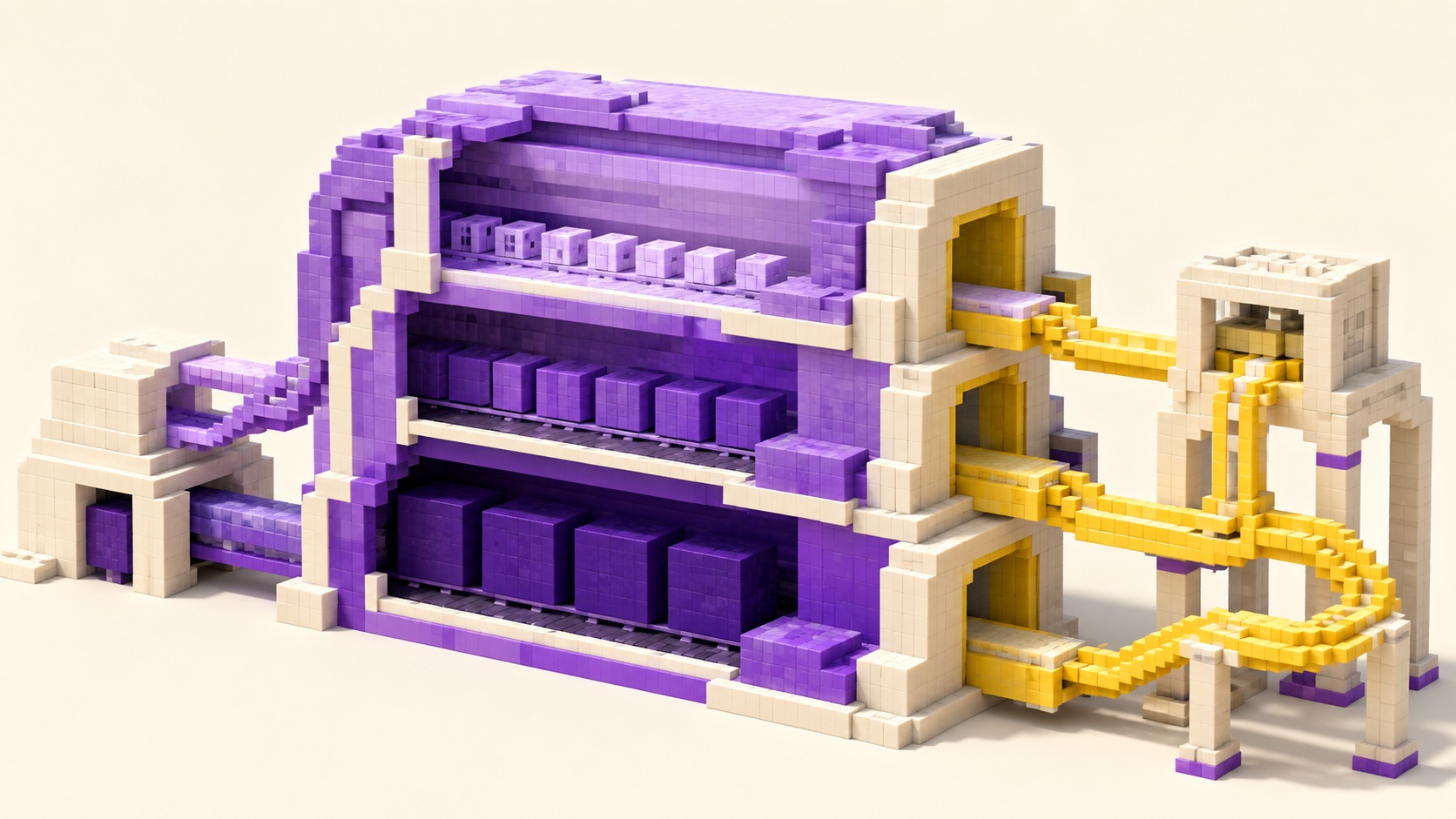
The easy headline is another benchmark race. The more durable change is product architecture. OpenAI split GPT-5.6 into Sol, Terra and Luna. Anthropic officially maintains Sonnet 5, Opus 4.8 and the higher-capability Fable 5. Customers can route different tasks to different cost, latency and capability points instead of sending every request to one flagship endpoint.
That does not translate neatly into less data-center demand. Lower cost and latency can move AI from occasional chat into retrieval, coding, checking, tool use and multi-step agents. The demand curve depends on tokens per task, rounds of inference, parallelism and whether those workflows reach production.
OpenAI: GPT-5.6 releaseAnthropic: Claude Sonnet 5Anthropic: Claude Opus 4.8Anthropic: Fable 5
Both labs are making frontier capability more tiered
| Company | Official product | Product signal | Infrastructure read-through |
|---|---|---|---|
| OpenAI | GPT-5.6Sol / Terra / Luna | High-performance, balanced and low-cost tiers run in parallel, with input pricing spanning $1 to $5 per million tokens. | Customers can route work by difficulty, broadening the mix of request types. |
| Anthropic | Sonnet 5 / Opus 4.8 / Fable 5Official product pages | Capability, price and reasoning effort are tiered; higher effort on Sonnet 5 can increase token use. | Lower list price does not guarantee lower compute per task when reasoning and tool depth increase. |
There is no clean comparable measure of total compute saved. API price, caching, reasoning effort and tool use vary across products. The confirmed change is that cost, speed and work depth now sit alongside capability as product design variables.
Higher efficiency can still create more inference
More tasks clear the economic hurdle
Lower cost makes higher-end models available to more teams and supports automation that was previously too expensive.
Each task can become longer
Agents plan, call tools, check outputs and retry. Better efficiency per token can coexist with more inference per completed task.
Concurrency becomes the constraint
Production workflows make capacity, response time and service levels more important than average daily volume.
BloombergNEF’s public data-center work provides the physical context: capital is available, while power access and execution remain central constraints. Model pricing changes how quickly demand can surface; it does not remove grid, networking, cooling or commissioning bottlenecks. BloombergNEF: AI data-center buildout
Reuters reporting belongs on a watchlist, not in a capacity order
Reuters reported a Claude Opus 5 release on July 24. At the source cutoff, IDC Atlas did not locate a corresponding product announcement on Anthropic's official news page. The item is therefore labeled “reported, official product page not located” and its price or capability claims are excluded from the confirmed-product table. Reuters: Claude Opus 5 report
The usable infrastructure signals are released-product capability and pricing, plus actual deployment, orders and capacity disclosed by labs, clouds, suppliers or project owners. Rumors and single-source reports belong on a verification list, not in a chip, megawatt or CapEx estimate.
Four measures matter more than the next headline
- 01Share of traffic by capability tier
Track movement across flagship, balanced and low-cost models rather than a single rank.
- 02Tokens and tool calls per task
Agent depth determines whether efficiency gains are offset by more work per job.
- 03Latency and peak concurrency
Production response-time targets shape capacity reserve, network design and regional deployment.
- 04Cloud capacity actually in service
Model releases are demand-side events. Energized, commissioned and sellable instances confirm the infrastructure side.
IDC ATLAS VIEWCheaper models are not evidence of weaker demand. They let more work cross the economic threshold and move competition toward stable latency, controlled cost and enough capacity to deliver useful work at scale.